


Kite Safari vs. Learning on Shore: Where Will You Actually Progress Faster?
Updated: Aug 18
A lot of kite beginners assume a kite safari is the fast track to learning — steady wind, "proper" spots, and let's be honest, it just sounds like an adventure. In reality, it's usually the opposite. Here's why learning on shore — in our shallow, 500-meter-wide sandy lagoon with side-shore wind — beats a week on a boat on every front: speed, cost, and safety.

1. The Spot Makes or Breaks Your Learning Curve
The best place to learn is one where mistakes don't cost you anything. A wide, sandy lagoon with side-shore wind is exactly that: you fall, you stand back up, you try again — right where you started. Most safari destinations are the opposite: offshore wind and a thin strip of shallow water. That combination drags students out to sea, so instead of practicing, they're waiting on the rescue boat. In the same stretch of time, a student on shore gets way more launches and rides in — and learning to kite really just comes down to reps. Add in the fact that constant "rescues" wear you out physically, and you're burning energy just getting back to your starting point instead of actually learning.
2. Wind Doesn't Care About the Boat's Schedule
Safaris run on a fixed calendar: depart Sunday morning, back in port Friday night. But wind doesn't check a travel agency's itinerary. If the best conditions of the week land on a Saturday or Sunday, you miss them entirely — either still in port or already home. On shore, you just go whenever the wind shows up.
3. It's Expensive
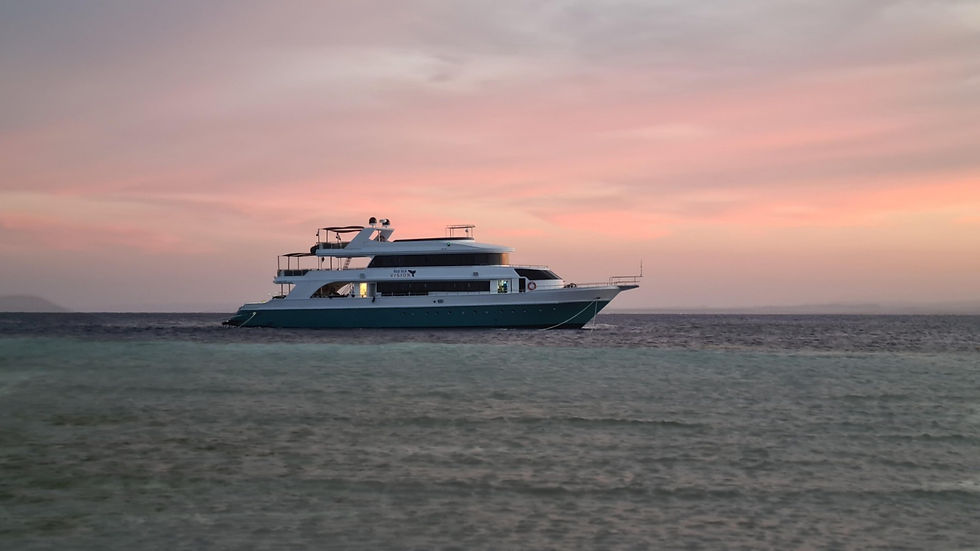
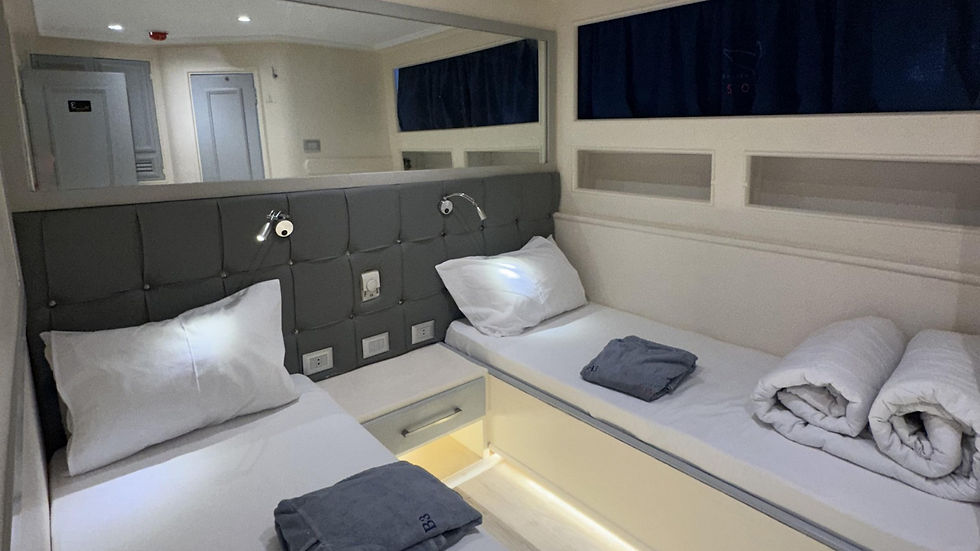
A double cabin on a five-day safari runs about €1,500. Want your own space? You're buying out the second berth, and now you're at €3,000. For that same budget — often less — you could book two weeks at a genuinely nice hotel: pools, good food, entertainment, comfortable rooms. And that's before factoring in that two weeks on shore gets you way more actual time on the water than five days on a boat.
4. You're Stuck on a Boat
Even the biggest boats have nowhere to go: your cabin, the saloon, the upper deck, the back deck. That's the whole map. You're living in that footprint for the better part of a week, and "where should I hang out today" means picking between the same four spots over and over. It gets old fast, especially next to a hotel where you've actually got grounds to walk, a change of restaurant, a different pool.
There's a less obvious risk here too. If you're traveling solo or as a couple, you don't choose your crew — you're just slotted in with whoever else booked that trip. If that group isn't your kind of people, there's no escaping it. On a boat, there's no "let's go find another pool" option. At a hotel, there is.
5. Safety Is Harder to Guarantee at Sea
Kitesurfing is an extreme sport — injuries happen. On shore, help is close: staff, transport, and medical resources are right there. On a boat, someone injured first has to be brought back to land, and in a real emergency, that delay matters.

Bottom Line
A kite safari is a great trip for riders who already know what they're doing and want to explore new spots. As a way to learn from zero, though, it loses on every count — the spot's worse for beginners, the schedule fights the wind, it costs more, you're boxed in, and help is farther away if something goes wrong. On shore, in a lagoon built for learning, you'll get there faster, cheaper, and safer.
Telegram or WhatApp Alexander
+201205965076


Comments